
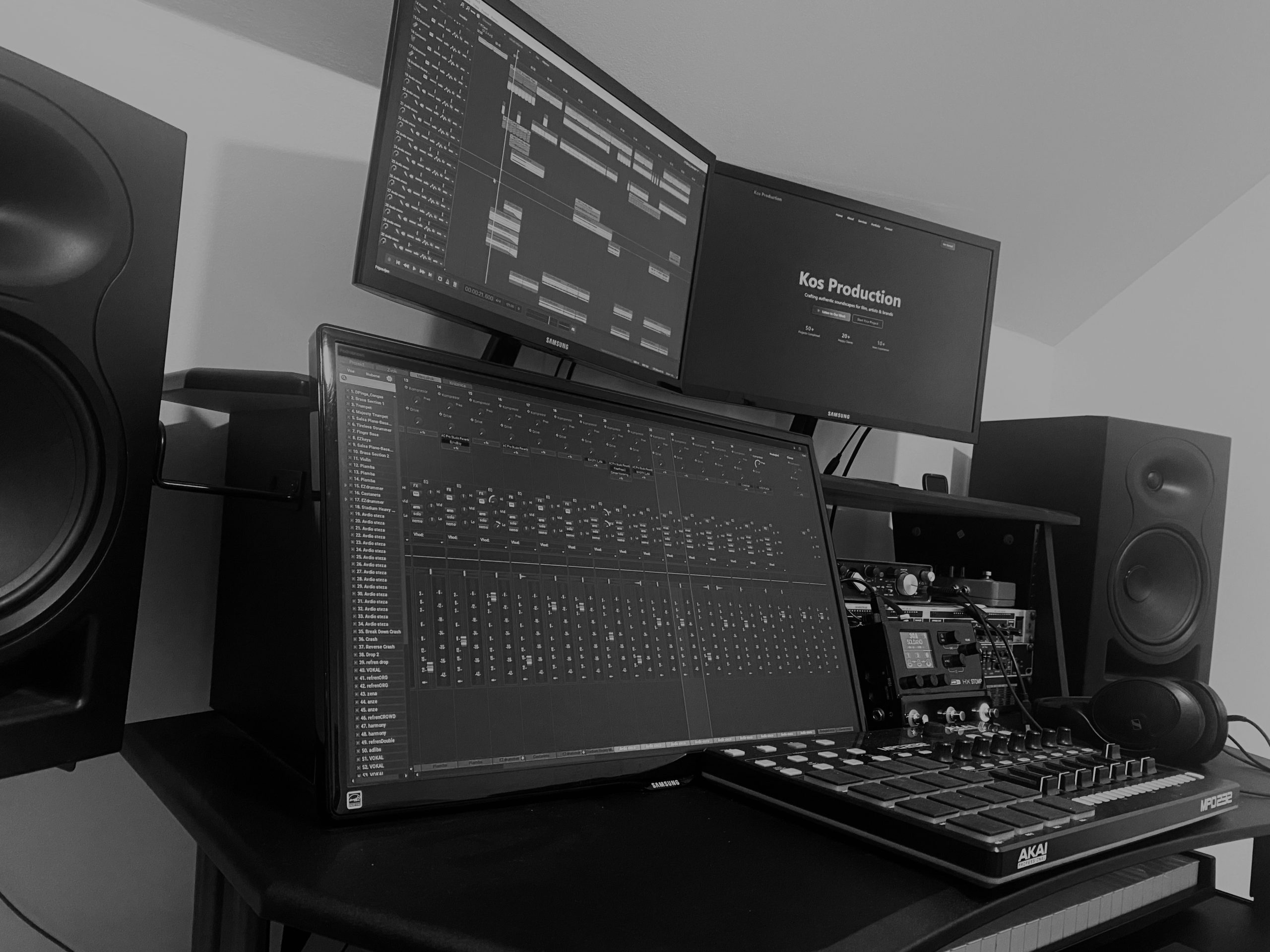
Spoiler alert: Some of the biggest hits you’ve been streaming were probably recorded next to someone’s unmade bed.
Let’s get real for a moment. While everyone’s obsessing over the latest digital trends, there’s a quiet revolution happening in bedrooms, basements, and spare rooms across the globe. The home studio isn’t just a pandemic-era stopgap anymore – it’s become the beating heart of modern music production. And honestly? It’s about time we gave it the respect it deserves.
The Great Studio Migration
Remember when making “real” music meant booking expensive studio time and dealing with intimidating sound engineers who looked at you funny when you couldn’t nail that vocal take on the first try? Those days are becoming ancient history faster than you can say “vintage Neve console.”
That three-year-old laptop probably has enough processing power for recording needs. In 2025, even mid-range computers can run most digital audio workstations without breaking a sweat. We’re living in an era where the computer sitting on your desk right now has more processing power than entire recording studios had just a decade ago.
The numbers don’t lie. A MacBook Pro or a PC with at least 16GB of RAM is a solid starting point for professional-quality recording. That’s it. No million-dollar mixing boards, no rooms the size of aircraft hangars. Just you, your laptop, and whatever creative chaos you can conjure up.
The Art of Making Magic in Small Spaces
Here’s where things get interesting. At a minimum, I would get a desk that has a drawer underneath (preferably a slide-out drawer), so you can keep all your little musical bits and pieces (guitar picks, guitar strings etc) and notes/lyrics book in there. The modern bedroom producer isn’t just an artist – they’re a master of efficiency and space optimization.
Think about it: every inch matters when you’re working in a 10×12 room that doubles as your sleeping space. But that constraint? It’s actually become a creative superpower. When you can’t rely on expensive acoustic treatment and perfect monitoring environments, you learn to make decisions with your ears, not your eyes.
The bedroom studio aesthetic isn’t just practical – it’s become a badge of honor. There’s something beautifully authentic about hearing a slight room tone or the distant hum of an air conditioner in a track. It reminds us that real humans, in real spaces, made this music.
Hardware is Having a Moment (Again)
While everyone was predicting the death of physical gear, something funny happened. The music production hardware landscape is witnessing a significant shift, driven by the resurgence of analog synthesizers, the rise of portable recording equipment, and advances in digital signal processing.
Producers are craving that tactile experience again. There’s something about turning a real knob, feeling the resistance of a fader, or watching analog VU meters dance that you just can’t get from clicking around on a screen. The MPC X SE is a self-contained music production powerhouse. With 16 RGB pads, a beautiful 10.1″ multi-touch display, built-in synths, and advanced sequencing, it bridges the old-school MPC feel with modern music creation.
It’s not nostalgia – it’s practicality. When your studio is also your bedroom, you need gear that inspires you to create the moment you walk in the door. A laptop might have infinite possibilities, but a hardware synth with perfectly weighted keys and immediate access to sounds? That gets you making music before you even sit down.
The Microphone Revolution
Let’s talk about the elephant in the room – or should I say, the microphone in the bedroom. You want to give preference to cardioid microphones when recording at home. They reject sound from the rear, so are useful for less-than-perfect rooms.
This is where bedroom producers have gotten seriously smart. Instead of fighting against their imperfect acoustic environments, they’ve learned to work with them. That slightly live sound from your bedroom walls? It might be exactly what your vocal needs to cut through a busy mix.
The key isn’t having the most expensive microphone – it’s having the right microphone for your space and your voice. Some of the most emotionally powerful vocals I’ve heard recently were recorded on mid-range condenser mics in rooms that would make traditional engineers cringe.
The Professional Reality Check
Now, before you think I’m saying bedroom studios are the solution to everything, let’s keep it real. The key to successful mixing in a bedroom is to start simple. Focus on balancing levels, using EQ to clear muddiness, and applying compression judiciously. Remember, less is often more in mixing.
There are limits to what you can achieve in an untreated room with basic monitoring. But here’s the plot twist – those limitations often lead to more focused, more intentional music. When you can’t rely on perfect acoustics, you develop better ears. When you can’t afford every plugin under the sun, you learn to make magic with the basics.
And when you do need that final professional touch? Even the best DIY setup has its limits. Bringing in a professional mixing/mastering engineer can take your bedroom recordings to the next level. The smart money in 2025 is on hybrid workflows – record at home, collaborate globally, and finish professionally.
The Future is Personal
What we’re witnessing isn’t just a trend – it’s a fundamental shift in how music gets made. The bedroom studio represents something bigger than just cost-effectiveness or convenience. It represents artistic freedom, creative authenticity, and the democratization of music production.
The tactile experience of analog gear, paired with the precision of digital tools, will continue to shape production styles in 2025. We’re not moving away from technology – we’re finding the perfect balance between digital precision and human touch.
Your bedroom studio isn’t a compromise. It’s not a stepping stone to something “real.” It’s a creative laboratory where some of tomorrow’s biggest hits are being born right now, probably while you’re reading this.
The Bottom Line
The next time someone asks you when you’re going to get into a “proper” studio, remind them that some of the most innovative, emotionally resonant music being made today is happening in rooms where the artist has to move their laundry to set up the microphone.
The bedroom studio revolution isn’t coming – it’s here. And frankly, it sounds better than we ever imagined it would.
Now excuse me while I go rearrange my furniture to get better bass response…